Early Years
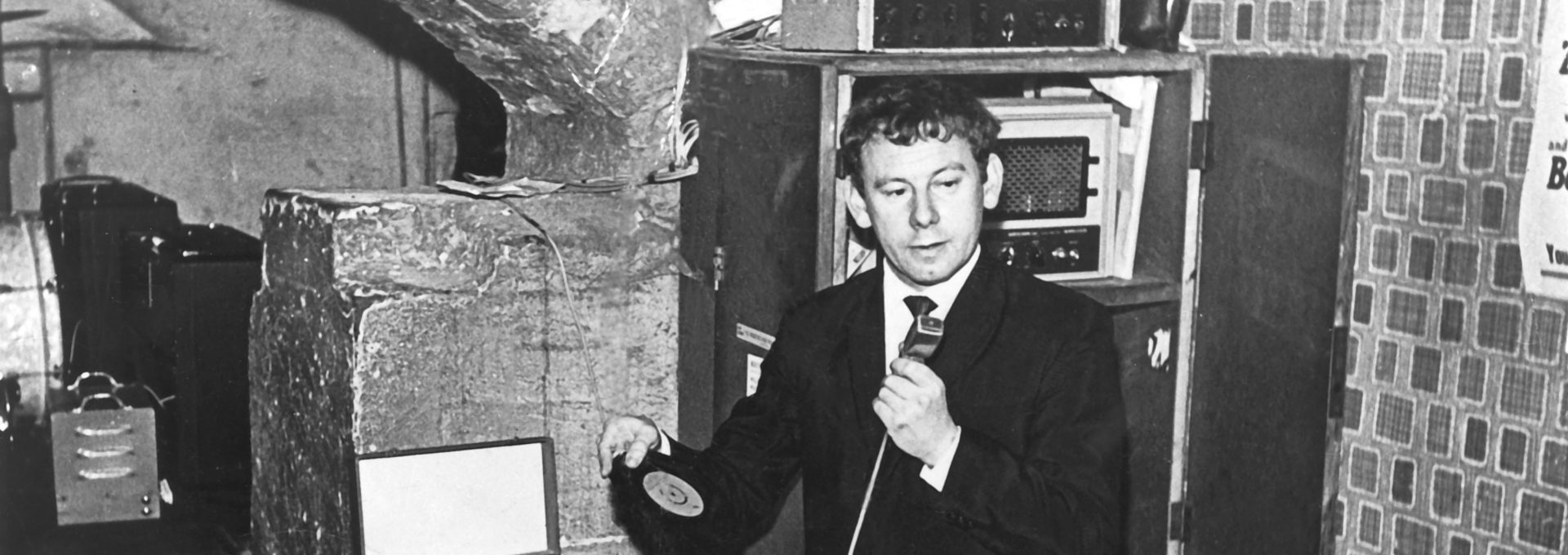

Frederick James Wooler was born in Garston, Liverpool, on 19th January 1926. At some point in childhood he adopted the name Robert Frederick Wooler, and in later life he was universally known as Bob. His journey from a modest terraced house in south Liverpool to a pivotal role in the birth of Merseybeat is one of the more quietly remarkable and often overlooked stories of British popular culture.
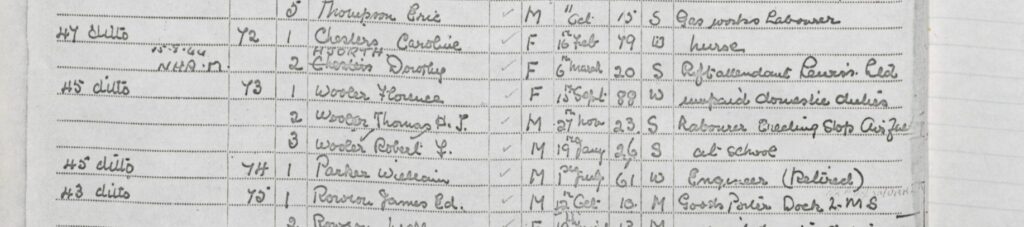
Bob’s parents were Thomas Henry Wooler and Florence Brown. He had an older brother, Thomas Henry Wooler junior, born on 27th November 1923, whom Bob always referred to as Jack. The family suffered early loss when Thomas senior passed away in May 1930, leaving Florence to raise two young boys alone. By the outbreak of the Second World War, Florence and her sons were living at 45 Calthorpe Street in Garston. Bob recalled his rather frugal upbringing at the two-story house in his 2002 biography, The Best of Fellas, co-written by Spencer Leigh soon after his passing.
“
We had cold water, and everything had to be boiled on the gas oven. We only had gas light. When the war came, they stopped all the conversions from gaslight to electricity because the authorities didn’t see that as important… we were not converted until after the war and we had to put up with gaslight and, of course, a wind-up gramophone.
Long suffering from angina, Florence died of a heart attack on 17th January 1942, just two days before Bob’s seventeenth birthday. Both parents were buried together in an unmarked grave at Allerton Cemetery.
Emergence in the Liverpool Music Scene
In the years following the war, Bob Wooler completed his national service and was posted to Singapore. On returning to Liverpool, he took a clerical job at the railway depot in Garston. But it was music that was his true calling. From an early age he was an avid consumer of popular culture, writing enthusiastic letters about films and music to magazines such as Picturegoer. By the mid-1950s, he had begun managing The Kingstrums, a skiffle group based on King Street in Garston.
By the start of the 1960s, Wooler was working as a compère and DJ at clubs and dance halls across the city, including the Holyoake Dance Hall near Penny Lane. Around this time he met Allan Williams, owner of the Jacaranda and the Blue Angel clubs and the first manager of The Beatles. When Williams opened a new club, the Top Ten, he persuaded Wooler to leave his railway job and become its resident DJ. The club opened on 1st December 1960, but burned down just six days later amid widespread local suspicion of arson. After the fire, Wooler found new work with promoter Brian Kelly, who ran regular dances at Litherland Town Hall, Lathom Hall, and Aintree Institute.
Meeting The Beatles
Devastated by the loss of his Top Ten club, Allan Williams urged Wooler to “look after The Beatles, get them some work.” Wooler had never actually seen the band perform, but Williams spoke highly of them and of their success during their Hamburg residency. At the time, Wooler was working for Kelly, and at his first meeting with The Beatles he promised to secure them a booking. As Wooler later recalled:
“
[The Beatles] were moaning to me about how little was happening. I’d never heard them before, but I said I’d try to get Kelly to put them on. In fact, I rang him up from the Jacaranda. I asked for eight pounds for them. Kelly offered four; we settled on six.
The fateful gig was to be hosted at Litherland Town Hall on 27th December 1960. Brian Kelly had lower expectations, as he had booked The Beatles before in their pre-Hamburg days and remembered them as fairly unremarkable. But Bob Wooler’s genius marketing had fuelled public interest, as he had billed the group dramatically as “directly from Hamburg”, leading most attendees that night to believe The Beatles were German. To the pleasant surprise of Kelly, a large crowd turned up that night, and when Bob Wooler announced The Beatles, the reaction was electric.
“
Everyone—the whole lot—surged forward towards the stage. The dance floor behind was completely empty.
The Litherland Town Hall gig helped enormously in spreading The Beatles’ name throughout Liverpool, and this couldn’t have been done without Wooler. He soon became the intermediary for further £6 bookings at Brian Kelly’s other weekly dances at Lathom Hall and Aintree Institute. A lover of wordplay and puns, Wooler designed elaborate posters and handbills advertising the band, often packed with visual jokes that were instantly attention-grabbing. Although The Beatles could be notoriously distrusting of authority, they always respected Bob Wooler. Likely due to him being several years their senior, Wooler occupied a position that was closer to that of a mentor or father figure than a peer. Much like Brian Epstein would later do, Wooler influenced The Beatles in adapting their performance style. He advised them to begin playing before the curtains opened and suggested using the opening fanfare of the William Tell Overture, taken from his own record collection, as their signature tune.
The Cavern Club
In January 1961, Bob Wooler secured his most famous position at the Cavern Club, acting as a compère, DJ, and talent booker. He immediately injected personality into the role, coming up with a new catchphrase, borrowed from a Peter Sellars LP produced by George Martin, that rang out over the speakers: “Remember all you Cavern-dwellers, the Cavern is the best of cellars!”
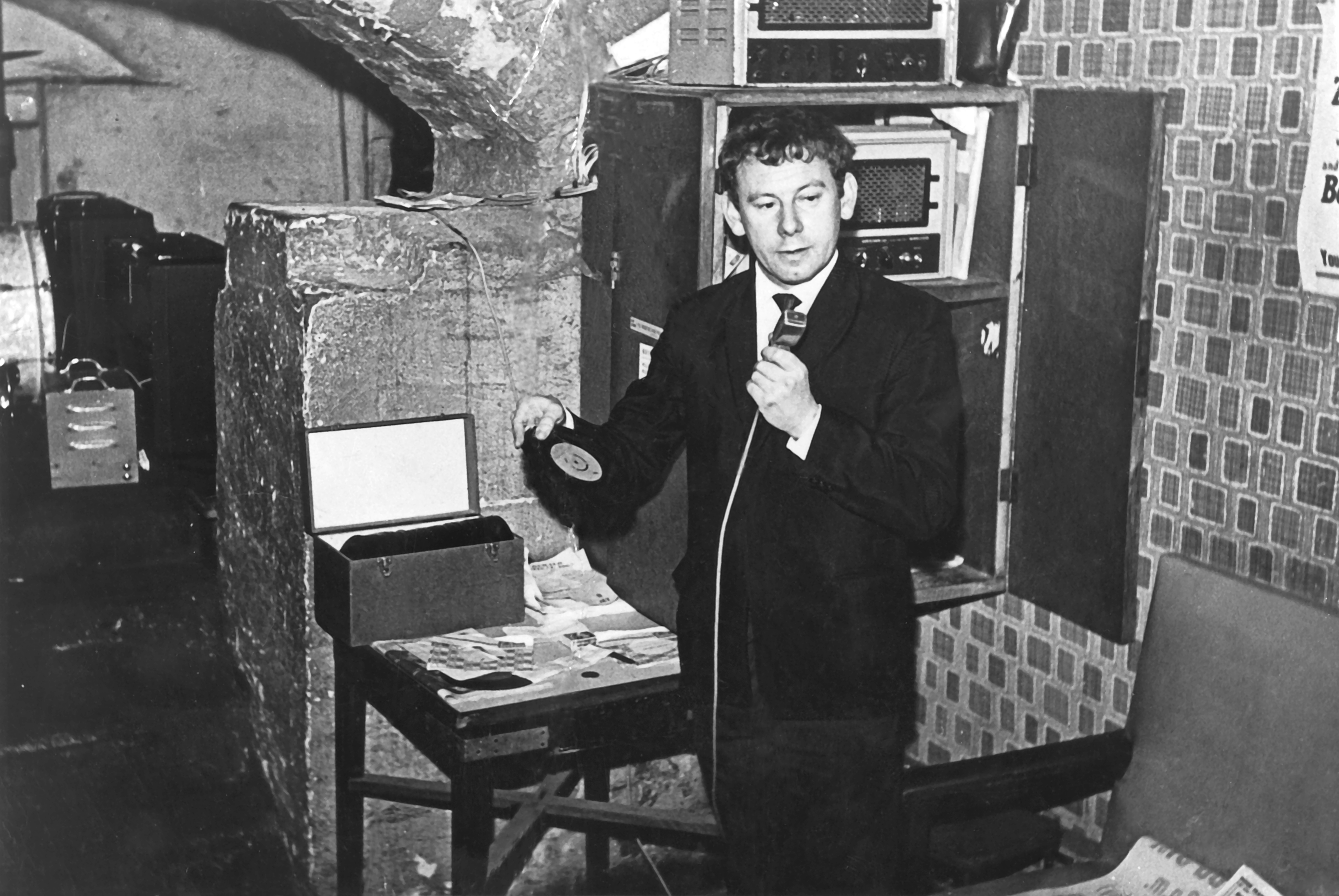
Wooler quickly began promoting The Beatles, adding them to a shortlist of groups eligible to play lunchtime sessions because they had no other work at the time. He offered them £5 for their Cavern debut and persuaded owner Ray McFall to give them a chance, predicting they would bring in at least 60 extra customers.
The Beatles not only met Wooler’s expectations, they exceeded them. On their first appearance, the supposedly headline act, the Blue Genes, were completely eclipsed. Wooler continued to host Cavern sessions, broadcasting from behind the stage and opening each event with his now-famous greeting. Reflecting on what made The Beatles stand out, Wooler recalled:
“
They had to let you know they were different. If everyone else was playing the A-side of a record, they’d be playing the B-side. If the others jumped around, they’d decide to stand still like zombies.
Promoting The Beatles
Wooler also became one of The Beatles’ earliest champions in print. Writing regularly for Mersey Beat, his debut column on 31s August 1961 focused entirely on the band, calling them “the biggest thing to hit the Liverpool rock and roll set-up in years.” This endorsement was accompanied by consistent promotion. Wooler plugged their Polydor record over the Cavern microphone and at dance halls across the city. Brian Kelly even stationed bouncers outside the band’s changing room to stop rival promoters from offering The Beatles more than £10 a night.
“
Rhythmic revolutionaries… seemingly unambitious yet fluctuating between the self-assured and the vulnerable. Truly a phenomenon—and also a predicament to promoters. Such are the fantastic Beatles. I don’t think anything like them will happen again.
Role in Management
Bob Wooler was among the first to recognise Brian Epstein’s interest in managing The Beatles. Acting as a trusted adviser, Wooler accompanied the band to their first formal meeting with Epstein at NEMS in early December 1961, following a Cavern lunchtime performance. The meeting was successful, with John Lennon reportedly introducing Wooler to Epstein as “me dad”. In the months that followed, Epstein frequently sought Wooler’s advice on matters relating to the group, valuing his experience with the local music scene. It was Wooler who Epstein went to for guidance on how to handle the PR crisis that would emerge from Pete Best’s dismissal from the band in 1962.
Later Life
Bob Wooler remained a key figure in the Merseybeat scene, helping many groups in their quest to make it big. He held his position at the Cavern Club until 1967, and by the time The Beatles broke up, Wooler retired from DJing.
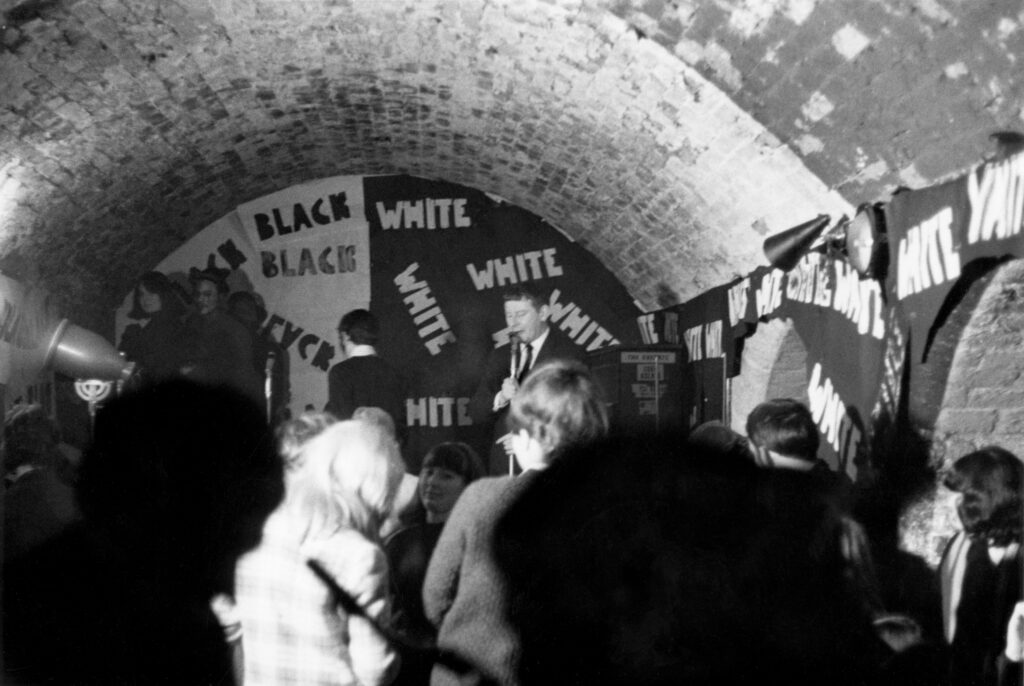
He later reunited professionally with Allan Williams to stage annual Beatles conventions in Liverpool. He survived a heart attack in the mid-1980s and was later divorced from his wife, Beryl Adams, Brian Epstein’s secretary, whom he had married in the mid-1960s. Wooler eventually to the hip and bohemian Lark Lane area. He looked back fondly on his days as a DJ. Wooler often referred to Mathew Street, home of the Cavern Club, with a signature play-on-words: “Mythew Street.”
Towards the end of his life, Bob Wooler decided to give more insight into his career than ever before by writing an autobiography. Unfortunately he passed away from heart failure in 2002, with the book, The Best of Fellas, to be published by co-author Spencer Leigh posthumously.
Overall, Bob Wooler was an important but sometimes overlooked character in the story of The Beatles. Not only was he the man who secured The Beatles’ regular Cavern Club performances, playing a significant role in their early development and local popularity, but he was one of their primary advocates, promoters, and most of all a friend to The Beatles.
A special thanks to Spencer Leigh, Dave Jones, and Jamie Yates, who made this blog possible.
Explore more stories...
Lennon-McCartney: The Greatest Songwriting Partnership in Pop History
Artefact Unveiling: A Day in The Life
Beatles Legacy Group marks 10 years with new Music Heritage Trail

The Beatles Story Wins Big at Liverpool City Region Tourism Awards
In My Life Memory Café – Dementia support in Liverpool

Beatles Workout Playlist

WIN – 2 free tickets to Fab4 VIP Experience
Bob Wooler: The Early Champion of The Beatles
Watch Beats & Threads: A Live Online Talk and Q&A