A Mysterious New Group
It was 1976, and the world was still reeling from the breakup of the Beatles almost a decade earlier. Music-lovers were hoping against hope that the world’s greatest band would someday get back together.
That same year, a then-unknown prog-rock group called Klaatu released their debut album 3:47 EST (self-titled Klaatu in the U.S.) under Capitol Records, the same label that had released The Beatles’ music in North America.
The album featured no band photos, individual credits, or biographical information, fuelling speculation about the band’s identity. Although 3.47 EST received positive reviews from critics, it soon faded into obscurity, collecting dust on the shelves of music shops.
One year later, the album would finally gain attention from the public. A journalist named Steve Smith was working for Providence Journal, a publication that often received requests to review albums from labels hoping to gain more press attention.
These records were collected in a “record grab”, a collection that was free to be listened to by those working for the paper. Smith was immediately intrigued by the album artwork, which featured an image with a sun with a face on it, and decided to give it a spin.
A Sound the World Had Heard Before
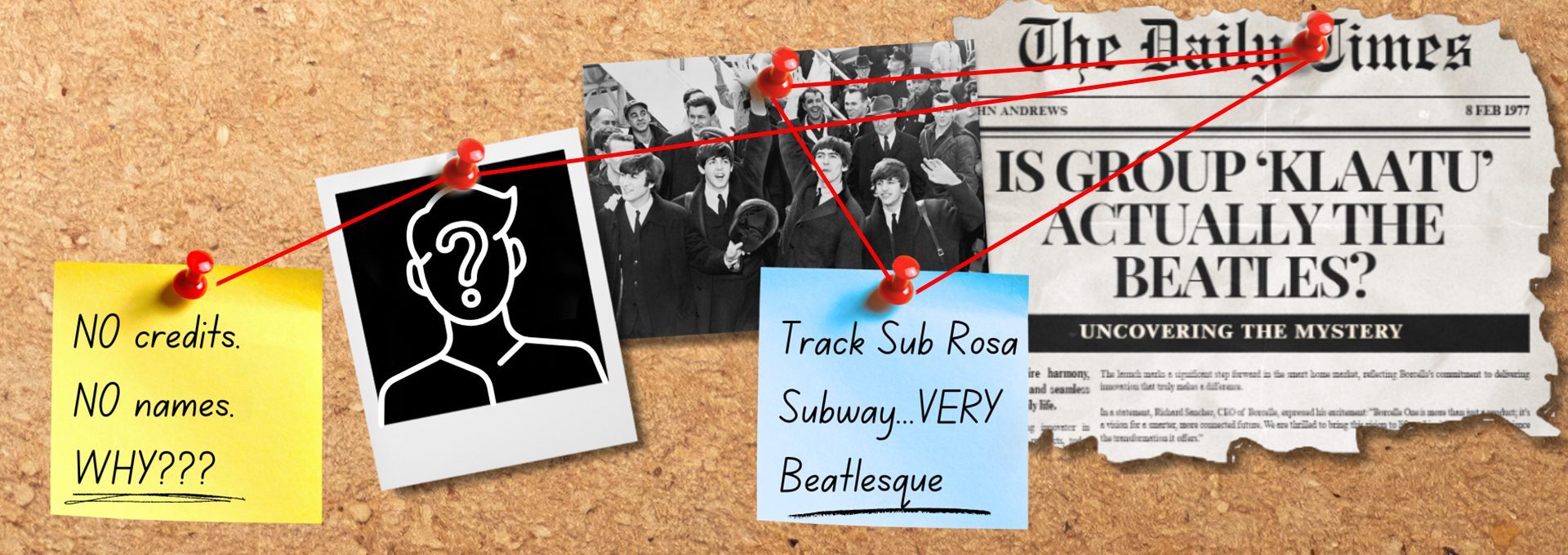
Upon first listen, Smith immediately noticed that the album sounded…familiar. A strange sense of déjà-vu soon washed over him. In February 1977, he published an article in the Providence Journal, suggesting that this mysterious band might actually be The Beatles, recording under a pseudonym. He remarked that one of the tracks in particular, “Sub Rosa Subway”, was, in his words, “completely Beatlish”
“
"Sub Rosa Subway" sounds like 1968-1969 Beatles. The vocals are exactly like Paul McCartney's, the drumming like Ringo Starr's, and the guitar work like George Harrison's and John Lennon's.
But it wasn’t just that one track. Klaatu’s song “Doctor Marvello”, said Smith, strongly resembled The Beatles’ “Blue Jay Way”. Other songs, he commented, included “digs from The Beatles’ past, such as singing through fuzztones, ‘Yeah, Yeah, Yeahs’ and unmistakable harmonies”.
Smith’s article quickly gained traction beyond the Providence Journal‘s readership in the small U.S. state of Rhode Island. People were thrilled by the idea that The Beatles may actually be back together. Curiosity surged, and many sought out the record to judge its Beatlesque qualities for themselves and to hunt for clues that such an unbelievable rumour could be true.
At last, Klaatu would achieve notable commercial success. 3.47 EST climbed to No. 32 on the Billboard charts. Its lead single, “Calling Occupants of Interplanetary Craft”, was later covered by The Carpenters in 1977, with their version reaching the Top 10 in both the UK and Canada.
More Clues Begin to Emerge
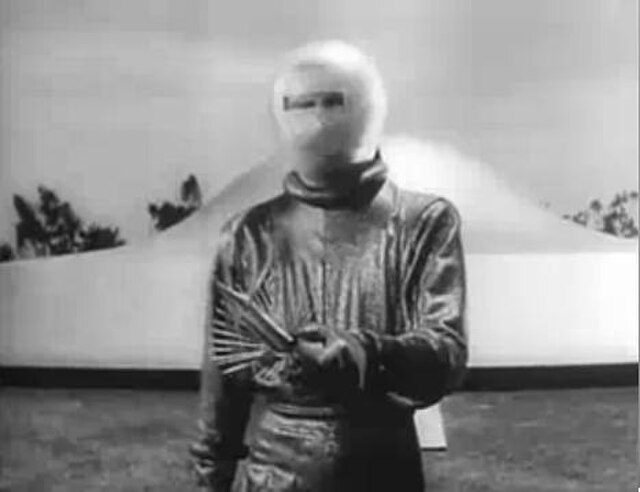
Meanwhile, amateur sleuths began noticing more clues that could connect Klaatu to The Beatles. The band’s name is a reference to an alien character Klaatu from the 1951 sci-fi film The Day the Earth Stood Still. Ringo Starr’s 1974 album Goodnight Vienna features a cover that references that film. Also, the track “Sub-Rosa Subway” kind of sounded like the Wings’ album Red Rose Speedway.
Finally, when Smith reached out to Capitol looking for answers, they got back to him saying that Klaatu was a “mystery group” who wanted to be known solely for their music. The choice of wording only added fuel to the fire. A “mystery group”? Fans immediately connected it to Magical Mystery Tour.
When people continued ringing Capitol HQ about Klaatu, the label would respond with cryptic answers, further fuelling the speculation. Rumours escalated: Klaatu was supposedly recording their second album in London… with the London Symphony Orchestra. Was this finally the long‑awaited Beatles reunion? Not all were convinced. New Music Express derided the conspiracy theory with an article titled “Deaf idiot journalist starts Beatle rumour”.
The Mystery is Solved
In 1977, Dwight Douglas, Program Director at WWDC‑FM in Washington, D.C., took matters further. He dug into the copyright records for the songs on 3:47 EST and discovered that they were not credited to John, Paul, George or Ringo, but to John Woloschuk, Dee Long and Terry Draper.
This conclusively proved that Klaatu was not The Beatles under a new disguise. Once the truth came out, radio stations quickly lost interest. Without the intrigue, Klaatu’s music received far less airplay, and the band faded into relative obscurity.
So Who Were Klaatu?
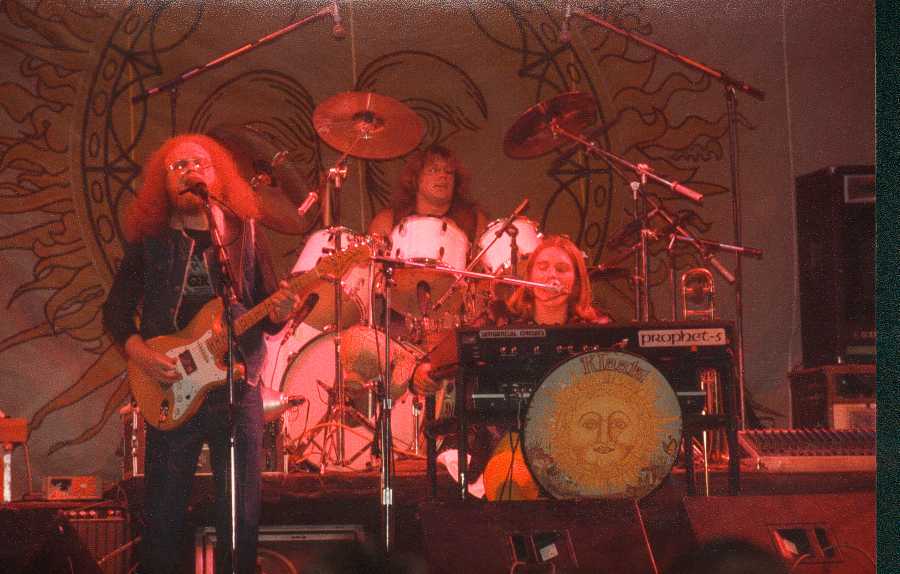
Klaatu were not a reincarnation of The Beatles at all, but a Canadian progressive‑rock trio formed in Toronto by multi‑instrumentalists John Woloschuk and Dee Long, later joined by drummer Terry Draper, completing the lineup that would remain throughout their recording career. Their music blended progressive rock, psychedelic pop, and richly arranged art‑pop, drawing comparisons not just to The Beatles but also to Queen, 10cc, the Moody Blues and Electric Light Orchestra.
In hindsight, the press statements issued by Capitol Records were never intended to be cryptic at all. Klaatu were simply a band who wanted their music to be judged on its own merits. From the beginning, they deliberately avoided the usual publicity tactics of the era of constant press statements and interviews, choosing instead to remain largely anonymous and let the music do the talking.
The Price of Fame
The sudden fame generated by the now‑debunked Beatles rumour proved to be a double‑edged sword. On one hand, the speculation brought Klaatu unprecedented attention. Their second album, Hope (1977), went on to sell a very respectable 400,000 copies, and the surge in press coverage helped them build a dedicated cult following that remains active to this day.
On the other hand, once it became clear that Klaatu were not, in fact, The Beatles in disguise, disappointment set in. Many listeners and radio programmers quickly lost interest, and the backlash cut directly against the group’s original mission: to be recognised solely on the strength of their music. In time, the band came to resent the rumour that had briefly elevated them.
“
We got some great reviews on the Hope album. But for every great review, we’d get a newspaper article saying: ‘Hoax!’ or ‘Scam!’ and a lot of negative press. We’d release an album and it would go virtually unnoticed... no matter what we did.
The Legacy of Klaatu
True to the philosophy that both defined (and ultimately complicated) their career, the members of Klaatu never left music behind. Terry Draper (until his passing in 2025) and Dee Long continued to release solo albums, with Draper also overseeing Klaatu’s catalogue and remastering work. Woloschuk occasionally performs with friends and continues to manage the band’s affairs through Magentalane Music. In the decades since, interest in Klaatu has quietly resurged, and they’ve maintained the cult following they gained during their hype in the 70s.
Today, the former members of Klaatu are far more open about their Beatles influences, while still keen to place them in a broader musical context. “I’m probably one of the biggest Beatles fans in the whole world,” Woloschuk has said, “but we did try to branch out into other influences, like 10cc, for example.”
“
If you’re going to steal – or learn – you steal from the best. Nobody’s going to steal from a bad band.
With the mystery finally stripped away, Klaatu’s music can now be appreciated on its own terms. We recommend revisiting 3:47 EST without the weight of comparison and simply enjoying it for what it is: a richly imagined, beautifully crafted progressive‑rock album that deserves its place in music history.
Get closer than ever before to The Beatles
Use promo code 241APRVIP for 2-for-1 tickets to the April session!
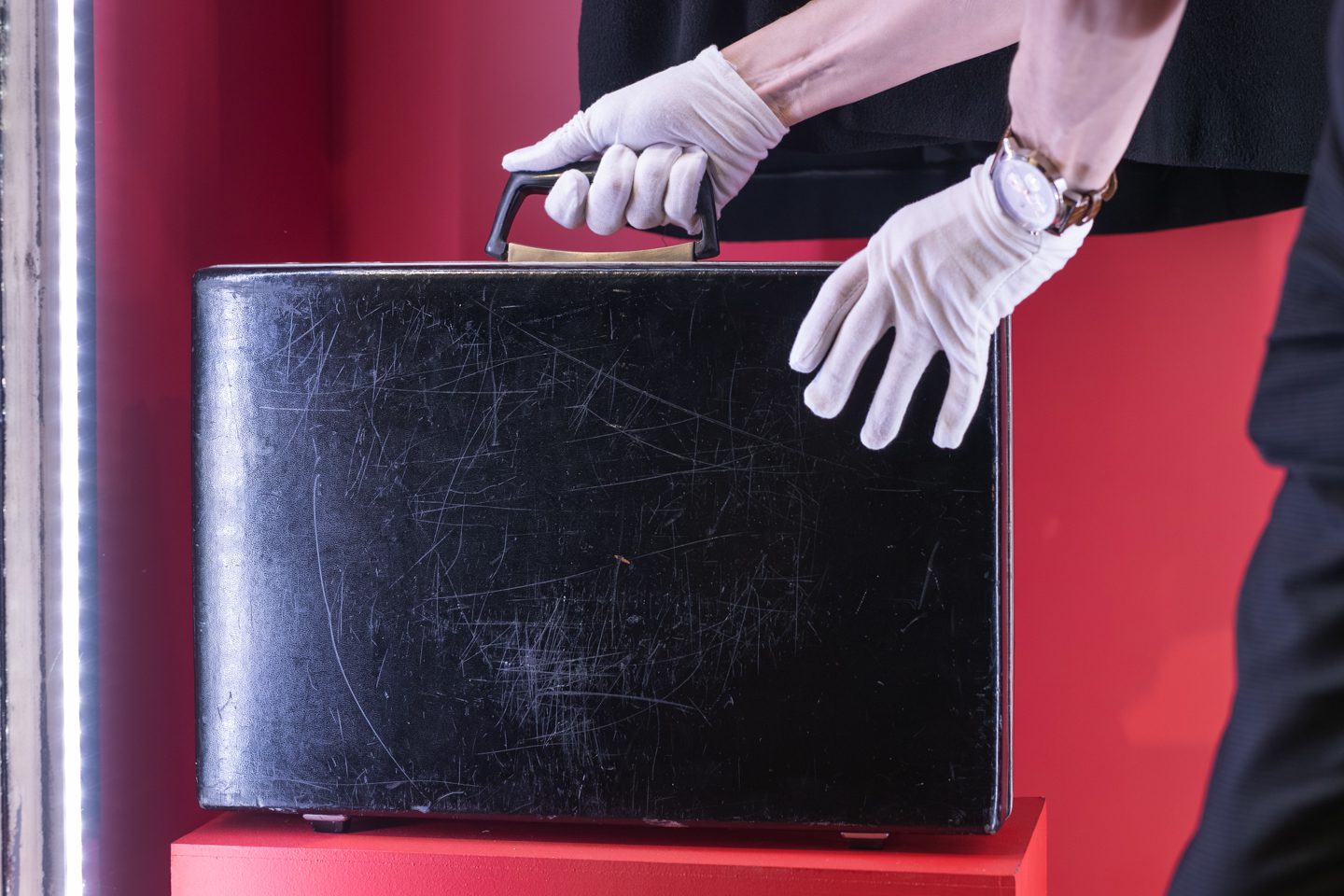
The Fab4 VIP Experience gives you the exclusive opportunity to get up close and personal with highlights from our impressive collection of Beatles artefacts! Sit at Ringo’s drumkit, look through John’s glasses, have your photo taken with George’s very first guitar, handle Paul’s Hofner bass, and hold Brian Epstein’s briefcase!*
All aboard for a private small-group tour of our museum led by an expert guide, along with welcome drinks, light-bites, desserts and gift bags for a truly VIP experience.
Book now to experience Beatles history in a new and exciting hands-on way.
Fab4 VIP Experience