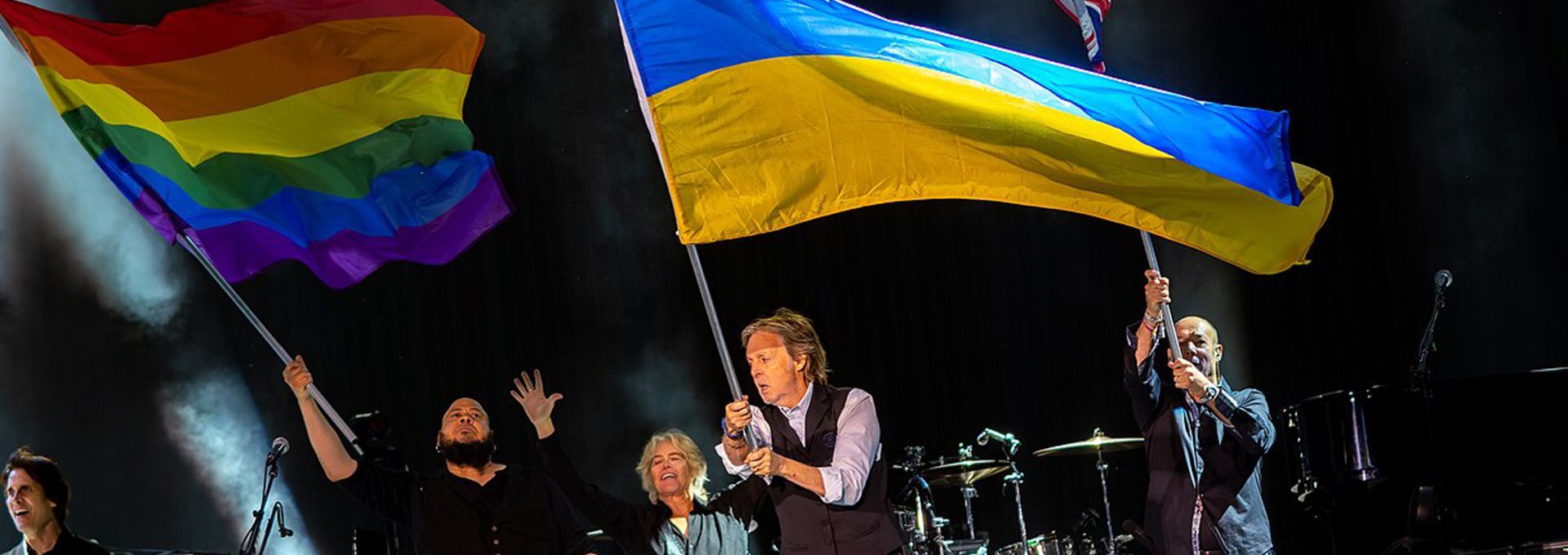
As someone who has been a global superstar for more than 60 years, Paul McCartney has spent decades using his global platform for good. While best known as one of the greatest musicians of all time, his legacy also includes a deep commitment to compassion, equality, and sustainability. This blog explores how McCartney has used both his music and influence to advocate for a better world, highlighting key moments from his activism across civil rights, animal welfare, and climate awareness.
Music as a Platform for Change
From his early days with The Beatles to his solo career, McCartney has consistently woven messages of peace, compassion, and unity into his work. One of his most beloved tracks, ‘Blackbird’, was actually written in response to the Civil Rights Movement in the United States. When The Beatles toured America in 1964, they witnessed firsthand the racial tensions in the country when they were offered to play at multiple venues under the condition the audience would be segregated: something the band took a brave stance against. McCartney has spoken about following the struggle for Black liberation in the US, from events involving the Little Rock Nine to the assassination of Martin Luther King Jr., all of which deeply influenced him. These experiences ultimately inspired him to write ‘Blackbird’:
“
I had in mind a Black woman, rather than a bird. Those were the days of the civil rights movement, which all of us cared passionately about, so this was really a song from me to a Black woman, experiencing these problems in the States: ‘Let me encourage you to keep trying, to keep your faith, there is hope.’
Nearly sixty years after making history, two members of the Little Rock Nine, Elizabeth Eckford and Thelma Mothershed Wair, met Paul McCartney backstage at his 2016 concert in Little Rock. He honoured their legacy by dedicating ‘Blackbird’ to them in front of the audience, a deeply moving tribute to their bravery and fight for justice.
While John Lennon is undoubtedly the Beatle best known for his anti-war music, Paul McCartney also explored similar themes in his own work. His 1983 song ‘Pipes of Peace’ conveys a message of reconciliation and human understanding. Originally conceived as a charity song, McCartney was inspired by the famous Christmas Day truce during the First World War when British and German soldiers laid down their weapons to celebrate together. Accompanied by a poignant music video depicting soldiers on opposing sides uniting, ‘Pipes of Peace’ reinforces McCartney’s belief in a world where our differences don’t tear us apart, but are celebrated.
More direct in its political stance was McCartney’s protest song ‘Give Ireland Back to the Irish’, released in 1972 with his band Wings. Written in the immediate aftermath of Bloody Sunday, when unarmed civil rights protesters were shot by British soldiers in Derry, the song reflects McCartney’s personal response to the events and his perspective at the time.
![A mural commemorating the victims of Bloody Sunday, Derry. Photo by Ian S., via Wikimedia Commons (CC BY-SA [licence version])](https://www.beatlesstory.com/app/uploads/2026/06/The_Bloody_Sunday_Commemoration_-_geograph.org_.uk_-_4775368-682x1024.jpg)
The track was swiftly banned by the BBC and other broadcasting organisations, limiting its exposure in the UK. Despite this, it achieved commercial success internationally and became McCartney’s first post-Beatles single to reach number one in Ireland and Spain. Although McCartney rarely returned to such explicit political commentary in his later work, ‘Give Ireland Back to the Irish’ remains a notable example of his willingness to use music as a platform to express his own convictions.
Championing Animal Rights
Paul McCartney’s most well-known and enduring cause is his dedication to animal welfare. He adopted a vegetarian lifestyle in the 1970s alongside his late wife, Linda McCartney, after an epiphany they had on their farm.
“
We were eating a leg of lamb, and we looked out at the lambs playing in the field. It was like, ‘We’re eating one of them now…’”
From that day on, Paul and Linda vowed to give up meat forever. Since then, the McCartney family have become one of the world’s most recognisable advocates for vegetarianism and veganism. At the time they went vegetarian, meat-free options were much more limited than they are today, and Linda McCartney sought to change that by creating her own recipes at home. Her passion led to the publication of Linda McCartney’s Home Cooking, a best-selling cookbook that introduced thousands to vegetarian cuisine. In 1991, she launched Linda McCartney Foods, a pioneering brand that brought accessible meat-free products into supermarkets and remains one of the most successful celebrity food brands in the world.
Also read: The Meat-Free McCartneys to learn more about the family’s vegetarianism advocacy.
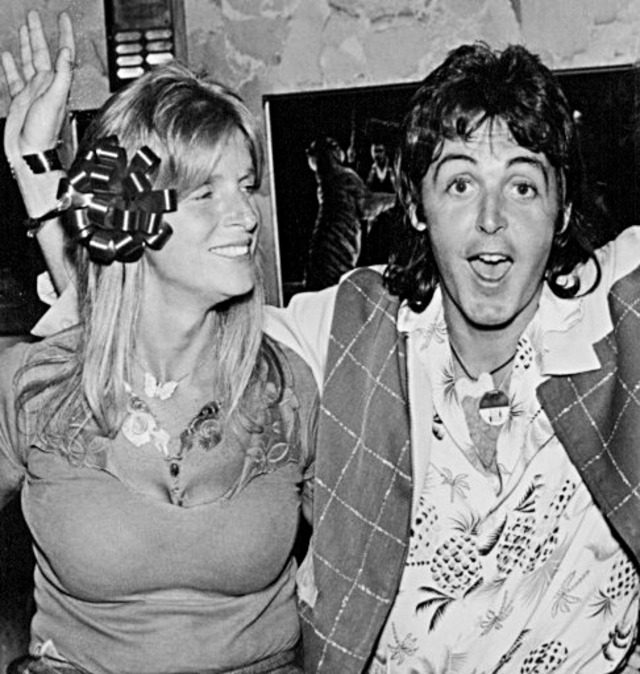
McCartney’s commitment to animal rights has also seen him work closely with organisations such as PETA (People for the Ethical Treatment of Animals), amplifying campaigns against animal cruelty on a global scale. A long-time supporter, he has lent not only his voice but also his music to their efforts.
One of the most powerful examples is his song ‘Looking for Changes’, originally released in 1993. Written in response to the suffering of animals used in laboratory experiments, the song confronts the realities of animal testing through vivid and unsettling imagery, calling for a fundamental shift in how humans treat “their fellow creatures.”
Decades later, McCartney revisited the song by donating it to PETA for a modern campaign against animal experimentation, accompanying it with an animated video that brought its message to a new generation. By reintroducing ‘Looking for Changes’, he reinforced his long-held belief that such practices are not only cruel but outdated, urging society to adopt more ethical and effective alternatives.
McCartney has often summarised his stance with a simple but powerful idea: if slaughterhouses had glass walls, more people would choose vegetarianism. It’s a message that reflects his belief in awareness as a driver of compassion.
Environmental Advocacy
Closely linked to his work for animal rights is McCartney’s commitment to environmental causes. He has repeatedly spoken out about climate change, deforestation, and the environmental impact of industrial farming. His philosophy is cautiously optimistic, with a strong belief that everyone can fight the fight with simple lifestyle choices.
At international forums and climate discussions, McCartney has advocated for simple, achievable solutions. In 2009, he spoke at the European Parliament, urging both policymakers and individuals to reduce meat consumption as a way to combat global warming. Years later in 2025, he went a step further by publicly criticising the climate-based summit COP30 for planning to serve meat at their conference, arguing that it contradicted its environmental mission and urging organisers to adopt a fully plant-based menu to reduce its carbon footprint.
Around major climate summits, including COP30, McCartney continued to emphasise the connection between diet, animal welfare, and sustainability. He has argued that reducing meat consumption is one of the most accessible ways individuals can help tackle the climate crisis.
Beyond diet, McCartney has also supported wider environmental campaigns. He has been a long-time supporter of Greenpeace, backing initiatives such as the Save the Arctic campaign, which calls for the protection of the Arctic from oil drilling and environmental exploitation. In 2013, he even wrote directly to Russian president Vladimir Putin, urging the release of Greenpeace activists who had been detained during a peaceful protest against Arctic oil exploration, highlighting his willingness to speak out on environmental issues at the highest political levels.
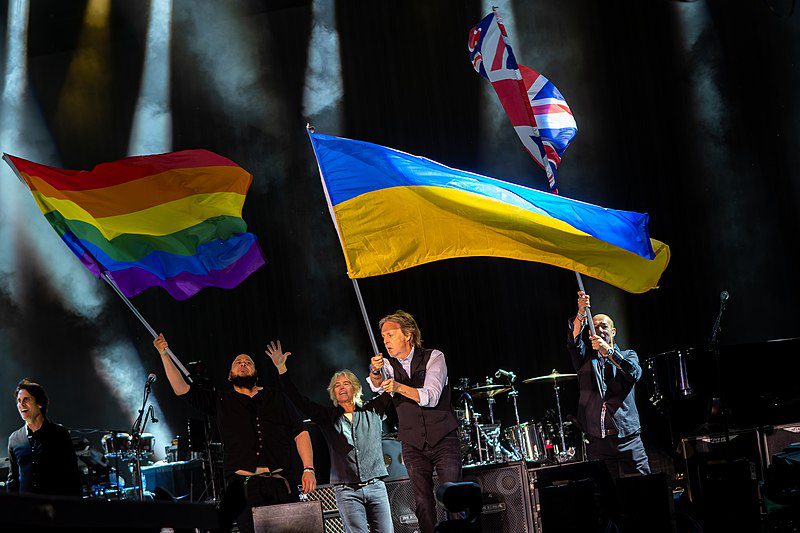
McCartney has also used his music to address the urgency of the climate crisis. His 2018 song ‘Despite Repeated Warnings’ serves as a powerful metaphor for climate change denial. The track tells the story of a stubborn ship captain steering towards disaster despite clear warnings, symbolising politicians who ignore scientific evidence about global warming. Through this vivid storytelling and evocative allegories, McCartney reminds us of the disastrous consequences ahead of us if immediate action is not taken.
This belief in practical, everyday change is at the heart of one of his most influential initiatives: Meat Free Monday, launched in 2009 with his daughters Mary and Stella. The campaign encourages people to cut meat from their diet for just one day a week, offering a simple and approachable way to make a difference. Research by the Brighton and Sussex Medical School found the campaign to be highly effective, with around 30% of participants who took part for five years or more eventually cutting meat out of their diets altogether.

At The Beatles Story, we proudly support this initiative through our Liverpool-based Fab4 Cafés. Every Monday, visitors can enjoy 20% off meat-free sandwiches, plant-based cakes, and milk alternatives, helping to promote the Meat Free Monday message and making sustainable choices more accessible.